

Exploring Alfred Hitchcock’s 'Psycho' (1960): Origins of Slasher Sub-genre, Transition from Marion to Norman, and Bird Symbolism
An exploration of the slasher subgenre in horror. Originally contributed for classics film group Reel to Real Classics at University of North Texas.

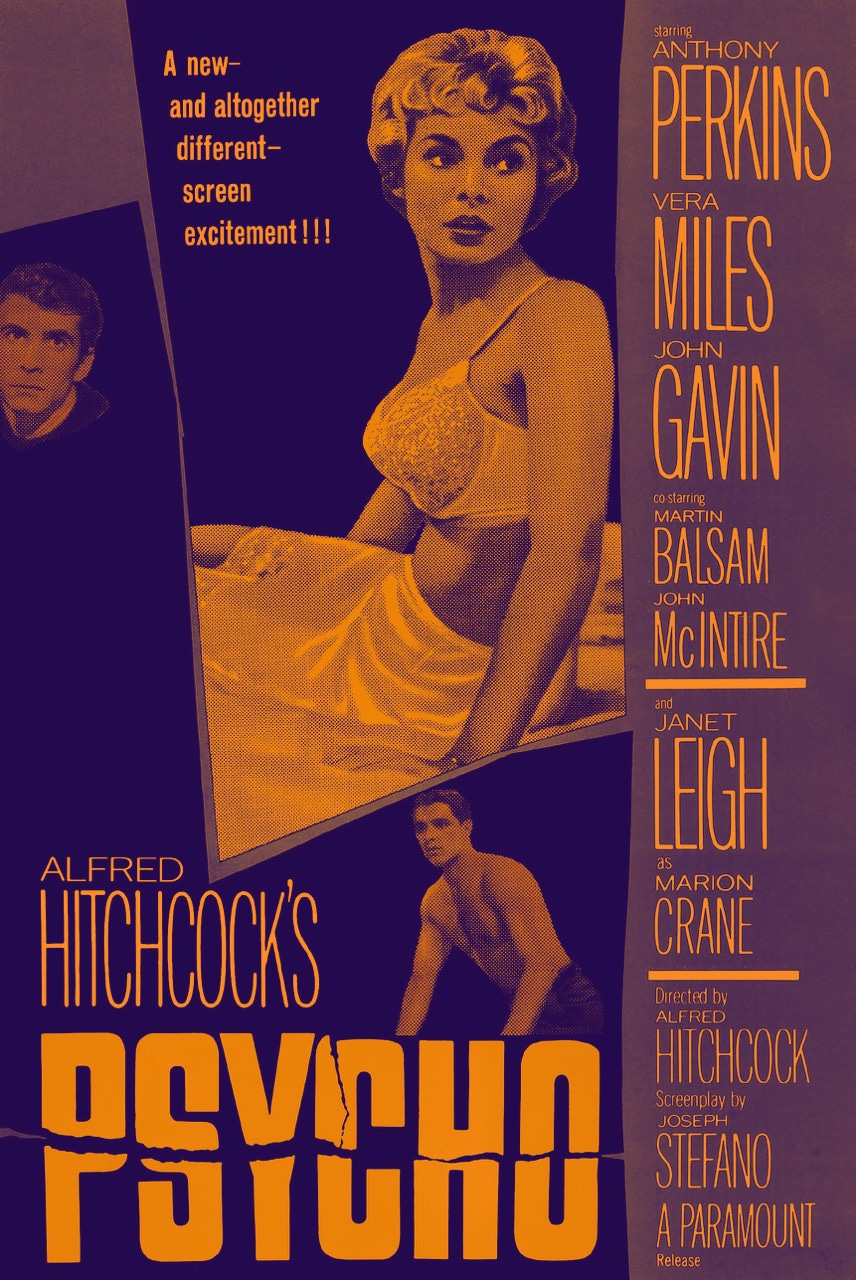
My experience with Alfred Hitchcock hasn’t been as extensive in comparison to watching other filmmakers works; however, of the two films that I have seen, Rear Window (1954) and Vertigo (1958), Hitchcock lives up to his title for being the ‘master of suspense.’ At this point today, there have been so many references to Hitchcock’s ‘shower scene’ from Psycho (1960) as well as the iconic score from American composer Bernard Hermann, the chilling, air-cutting keys when the shadowed, mysterious killer is revealed for the first time. I felt that the experience of watching Psycho for the first time would’ve been tainted from its cultural impact. I was horribly wrong.
Origins of Slasher Subgenre
I’ve seen so many slasher films such as Halloween (1978), Friday the 13th (1980), Nightmare on Elm Street (1984)—the essential Slashers for spooky season. But one slasher franchise that stood above all, is Scream (1996). Not only does Scream solidify itself in postmodernism with its hyper reality and self-awareness of the horror genre, but identifies the survival rules that were indirectly established from Hitchcock’s Psycho—(synopsis of film here). YouTube channel CineFix released a video essay this year in October titled “A History of Slashers'' from writer Tom Jorgensen. They identify these essential rules to surviving a horror movie and mention how Psycho laid the foundation for horror around the world for future generations of the horror genre.
Jorgensen states the first rule based after Marion Crane’s (Janet Leigh) sexual relations with her boyfriend Sam Loomis (John Gavin) in the beginning of the film. “Rule #1: Sex Equals Death” (Jorgensen). Marion, being an unwed secretary having these secret relations with a married man, creates a complex moral confliction, expressing the first sinful act that, if committed, you are guaranteed to die. He goes onto explain how on top of Marion having sex before marriage, she goes on to steal a large amount money from her boss to pay off her boyfriend’s debt, which ultimately leads to her downfall. “Rule #2: Immorality Quickens Mortality” (Jorgensen). Although Marion decides to not go through with running away and keeping the money, she faces the consequences of death by committing these immoral acts against the people that trust her—which gave us the iconic slasher death shower sequence from Psycho.
A private investigator named Milton Arbogast (Martin Balsam) becomes involved with Sam Loomis and Lila Crane (Vera Miles), Marion’s sister, after she expresses the unexpected week-long disappearance of Marion. Arbogast stumbles across the Bates Motel where he meets Norman Bates (Anthony Perkins), angsty and completely against Arbogast speaking to his mother about the entire situation. When Arbogast infiltrates the Bates’ home, he’s greeted by the knife-wielding maniac mother and ultimately, meets his doom. “Rule #3: Never Be Alone” (Jorgensen). If there’s the highly suspicious, twitchy motel owner not compromising to question about the person you’re looking for, don’t wander alone into their creepy home and territory! Both Sam and Lila uncover the secret Norman has been hiding all along—keeping his mother alive by inhabiting her personality and becoming her, himself. “Rule #4: The Killer is Psychological Trauma Manifest” (Jorgensen). The narrative Hitchock presented in the film by providing consistent elements of suspense created these unspoken rules that motivated the horror genre into diverse methods of heightened thrills, explanations for motivations, and subverting audience expectations.
Transition from Marion to Norman
The way Hitchcock transitions from Marion being the main protagonist to Norman is one of the most disturbing yet brilliant techniques I’ve ever seen executed in a film. Although I had the shower sequence in the back of my head while watching the film for the first time (constantly referenced in pop culture), I wasn’t sure how it was going to lead up to that defining moment once the film started since Marion was an unfamiliar character I didn’t associate with that scene. There were so many red flags that I started recognizing her actions from just being aware of horror movie tropes where I knew it wasn’t going to end well for her character.
After the classic, knife slashing sequence in the shower, Hitchcock dolly rolls the camera out of an extreme close-up of Marion’s eye, where we now know that her personal journey has ended at the Bates Motel. The film then transitions to Norman yelling hysterically at his mother running to the motel room, panicked at Marion lying dead on the bathroom floor.
We then follow Norman in shock, start to clean the room of any evidence that a crime was ever committed, task by task: closing the motel room windows; shutting the front door; turning the light off; turns off the shower-head; takes the plastic shower curtain; drags Marion’s dead body over the shower curtain; mops the blood from the bathtub and bathroom floor; backs her car up to the motel room; puts her body and belongings in the trunk; drives to the back of the motel.
This delicate, intricate scene of the audience watching Norman cover up this horrific accident step-by-step is of him not cleaning up the mess of a deranged killer, but the mess his mother has made. And what’s wicked is that after all that, he’s in the back of the motel pushing the car into this large mud pool and halfway through, the car stops sinking. He starts to panic and look around to see if anyone is watching, and as soon as the car starts to sink again, the moment of relief that, as a viewer, I felt for the murder to be covered up, was the moment I knew we were now following the journey of a “psycho.”
Bird Symbolism
There are a lot of images and references to birds throughout the film that represent different characteristics of our two main protagonists, Marion Crane and Norman Bates, our main antagonist, Norma Bates, and the film itself.
The film begins Hitchcock utilizing birds eye view establishing shots of Phoenix, Arizona, which is where Marion Crane hails from. The city itself is named after the mythological bird, Phoenix, which is based off of a bird that rises from the ashes. Hitchcock utilizes high bird’s eye view camera shots when Norma Bates attacks her victims. In the first scene where Norma kills Marion in the shower, the downward motion of the kitchen knife could be interpreted as a bird’s talon clawing at its prey. This could also be seen when Arbogast is walking up the stairs, and Norma speedwalks out the room to the top of the stairs and jabs downward, almost leaving a “claw mark” on his face as he stumbles downward.
Norman, however, when he invites Marion to eat dinner, he expresses his interest for stuffed birds and taxidermy hobby. In this scene, they are surrounded by different birds in the office at the Bates Motel, which could be interpreted as capturing the emotions and characteristics of those characters at a certain point in time. Such as when Norman switches from being humble to angry and annoyed, you can see that the low-angle shot makes him more menacing, with an owl hanging over him. In this instance, I feel it’s Norma speaking, which indirectly establishes the predator/prey relationship of both Marion and Norma since Norman is fond of Marion.
When Norman is alone in the office after their conversation, the camera is framed with both an owl and a turkey that express two different natures: the good and the bad (Norman versus Norma). He then persists to spy on her through the hole in the wall, where Marion is alone and most vulnerable, surrounded by pictures/paintings of delicate birds that are non-predatory. When Norman moves away from the wall, all you see is the owl hovering above him, which resembles the transition of Norman to Norma, deciding that he is going to kill her because of his sexual desires for her.